No responsibility is taken for any information
which may appear on any linked websites.
Olbios does not accept any liability to any person for the information or advice which is provided on this website or incorporated into it by reference
There are an estimated 10 million non-governmental organizations (NGOs) worldwide. Source: The Global Journal
In a typical month, a massive 1.9 billion people will help a stranger; 1.3 billion people donate money and whilst 800 million people will volunteer. Source : CAF World Giving Index
If NGOs were a country, they would have the 5th largest economy in the world.
In only 36 countries covered by the study, 20 years ago, volunteers comprised 44 % of the work force of civil society organizations representing the equivalent of 20.8 million full-time workers.
Source: John Hopkins University, Center for Civil Society Studies
Nearly one in three (31.5%) people worldwide donated to charity in 2015 and one in four (24%) volunteered. Source: CAF World Giving Index 2015
There are more than 1.4 million NGOs in the United States that employ 11.4 million Americans. Source: Urban Institute/Bureau of Labor Statistics
84% of Canadians donate to non-governmental organizations with an average individual donation of $446 per year. In total, that is $10.6 billion donated to NGOs by Canadians every year. Source: Imagine Canada
Some of the world’s most generous countries are among the most deprived.
The G-20, which represents the world’s largest economies, accounts for only 5 of the top 20 countries in the CAF World Giving Index.
For the first time since 2008, men are now more likely to give money than women.
People from Iraq were most likely to have helped a stranger, replacing the United States which came top last year.
There has been a recovery in young people’s generosity, helping to reduce the generation gap which sees much more giving among older people.
Source : The 2015 CAF World Giving Index
With over 3.3 million non-governmental organisations, India has approximately one NGO for every 400 people. Source: Infochange
The world in english
Among the ten ten most generous countries in the world are : Ireland, United Kingdom, Australia, Canada, New Zealand and United States. Source: CAF World Giving Index 2015
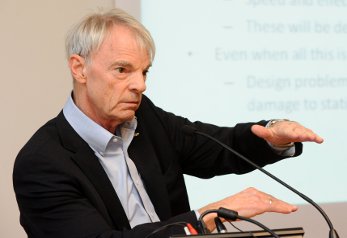
Giving money to someone else actually makes you feel better than spending it on yourself, according to research from the Harvard Business School. Participants in the study actually predicted the opposite, but the results were overwhelming. Source : Michael Norton, Harvard Business School
There are more than 129,000 public-benefit foundations in Europe. Combined these non-governmental organisations (NGOs) give more than 53 billion euros annually. Source: Donors and Foundations Networks in Europe
Australia is one of the most generous countries in the world. On average, more than two thirds of Australian’s help strangers or donate money while one third volunteer. Ireland is the second most generous country in this aspect, followed by Canada. Source : Unscripted
The top 20 countries for charitable giving vary economically, geographically and politically; there’s at least one country from each continent. The list includes both Qatar, a country with the second highest GDP per capita and also Liberia, which has the second lowest GDP per capita. The USA, a nation of 300 million people, also makes an appearance in the top 20 - as does Trinidad and Tobago, a nation of just over one million. Source : CAF World Giving Index
The NGO sector In England and Wales is made up of 165,000 registered charities, 948,000 employees, 943,000 trustees, and 3,200,000 volunteers. Source: Charity Commission
The past decade has seen a massive jump in generosity, according to recent research. Between 2001 and 2011, giving around the world grew a whopping 240%. Source : Giving USA 2012 Report
40% of the French population volunteers with a local association or NGO and 22% regularly donate money.
Source: France Bénévolat
The Third Sector in Germany consists of more 600,000 non-governmental organizations. 40% of the NGOs were founded after the year 2000. Source: ZiviZ
As of 2015, there were 136,453 registered non-governmental organizations in South Africa and on average, 68 new NGOs are registered every day. Source: Republic of South Africa
The NGO sector in Kenya alone represents more than 290.000 full-time employees and volunteers of which 80% are under the age of 24. Source: Devex
The GWP found that 16 per cent of adults worldwide volunteered their time to an organization. People in North America, Australia and New Zealand were the most likely to volunteer, followed by those in South-East Asia (specifically Cambodia, Indonesia and the Philippines) and Africa. Source : The Gallup World Poll
There are more than 600,000 non-governmental organizations (NGOs) in Australia whose employees make up 8% of Australian workforce. Source: Australian Charities and Not-for-profits Commission
Three stunning facts
The number of people worldwide donating money to NGOs increased from 1.2 billion in 2011 to 1.4 billion in 2014. By 2030, the number is expected to grow to 2.5 billion.
With over 3.3 million NGOs, India has approximately one NGO for every 400 people.
Globally,1.4 billion people donated to NGOs in 2014. By 2030, this is expected to be 2.5 billion! Source: Charities Aid Foundation
The Sharing Economy is growing faster than Facebook, Google and Yahoo combined. It has been valued at $15 billion 2 in its first 7 years compared to the combined growth of Facebook, Google and Yahoo of $11 billion.
Source : Report by Benita Matofska
Fascinating Statistics
The 2007 Canada Survey of Giving, Volunteering and Participating, conducted by Statistics Canada, recorded a total of 2.1 billion volunteer hours with both an increase in the number of volunteers (5.7%) and volunteer hours (4.2%) from 2004.
In 2004, in the United States, the Bureau of Labor Statistics of the Department of Labor indicated that 62.8 million people had volunteered for an organization at least once in the previous 12 months.
The Bureau of Statistics of Australia found that, in 2007, 5.2 million people volunteered for a sum of 713 million hours of work, the equivalent to 14.6 billion Australian dollars of paid work time. The study showed that 34 per cent of the adult population volunteered (36 per cent of women and 32 per cent of men)
The estimated value of volunteer is $23.07 per hour. Thus, the value of the 7.7 billion hours of volunteer work performed by 62.6 million Americans, or 25.4 percent of the adult population, in 2013 was $173 billion. The NGO workforce is actually the third largest among U.S. industries. Source: Independent Sector
Total giving in the United States to non-governmental organizations was $358.38 billion in 2014 (about 2% of GDP) – an increase of 7.1% from 2013. Source: Giving USA Foundation
9 out 10 people in the Gulf states donate to NGOs regularly with 63% of the donations being made during the religious holidays of Ramadan and Eid. Source: Philanthropy Age
53% of Asia Pacific citizens donate to NGOs with those in Thailand (71%), Vietnam (70%), and Hong Kong (65%) giving most often. Children’s health and education is the most popular cause. Source: MasterCard Engagement Bureau
The NGO sector in Sweden is made up of 232,000 non-governmental organizations and 58% of its employees are female. Source: Statistiska centralbyråns
80% of global citizens agree that nongovernmental organizations (NGOs) make it easy to be involved in positive social change. Source: Walden University